Buy darios.eu ?
We are moving the project
darios.eu .
Are you interested in purchasing the domain
darios.eu ?
domain@kv-gmbh.de · 0541-91531010
Buy darios.eu ?
What is transitive and intransitive in the subject of Italian?
In Italian, transitive and intransitive refer to the type of verbs that can be used with a subject. Transitive verbs require a direct object to complete their meaning, while intransitive verbs do not require a direct object. For example, in the sentence "Lui mangia la mela" (He eats the apple), "mangia" is a transitive verb because it requires a direct object (la mela). On the other hand, in the sentence "Lui dorme" (He sleeps), "dorme" is an intransitive verb because it does not require a direct object. Understanding the difference between transitive and intransitive verbs is important for constructing grammatically correct sentences in Italian. **
Is the following relation transitive?
To determine if a relation is transitive, we need to check if whenever (a, b) and (b, c) are in the relation, then (a, c) is also in the relation. If this holds true for all elements in the relation, then the relation is transitive. **


Similar search terms for Transitive
Top-Angebote
Products related to Transitive:
-
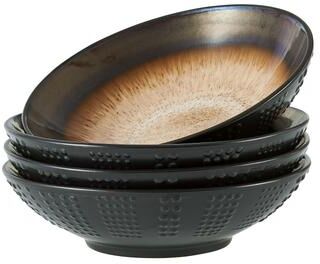
Mikasa Gourmet Basics Gourmet Basics by Mikasa Set of 4 Verona Pasta Bowl, 26 OzDrawing inspiration from the beautiful patterns of nature, this Verona Set of 4 Pasta Bowls by Mikasa features a combination of speckles, dots, and linear striations in rich earth tones.42,32 $*Shipping: 0,00 $Secure redirect to the provider



-
What are transitive verbs in English?
Transitive verbs in English are verbs that require a direct object to complete their meaning in a sentence. This means that the action of the verb is done to someone or something. For example, in the sentence "She ate the apple," the verb "ate" is transitive because it requires the direct object "the apple" to make sense. Transitive verbs are an important part of constructing clear and complete sentences in English. **
-
Why is this relation not transitive?
This relation is not transitive because transitivity requires that if a is related to b and b is related to c, then a must be related to c. In this relation, it is possible for a to be related to b and b to be related to c, but a is not related to c. This breaks the transitive property and makes the relation not transitive. **
-
Is this relation symmetric and transitive?
To determine if a relation is symmetric, we need to check if for every (a, b) in the relation, (b, a) is also in the relation. To determine if a relation is transitive, we need to check if for every (a, b) and (b, c) in the relation, (a, c) is also in the relation. If a relation is symmetric, it means that for every (a, b) in the relation, (b, a) is also in the relation. If a relation is transitive, it means that for every (a, b) and (b, c) in the relation, (a, c) is also in the relation. You would need to provide the specific relation in order for me to determine if it is symmetric and transitive. **
-
What are transitive and intransitive verbs in Japanese?
Transitive verbs in Japanese are verbs that require a direct object to complete their meaning. For example, the verb "taberu" (to eat) is transitive, as it requires a direct object such as "pan" (bread) to complete the action. Intransitive verbs, on the other hand, do not require a direct object and express an action that is performed without affecting another object. For example, the verb "aruku" (to walk) is intransitive, as it does not require a direct object to complete its meaning. Understanding the difference between transitive and intransitive verbs is important for constructing grammatically correct sentences in Japanese. **


Is a purely reflexive relation also transitive and symmetric?
A purely reflexive relation is transitive because for any element a, if (a, a) is in the relation and (a, a) is in the relation, then (a, a) must also be in the relation. However, a purely reflexive relation is not symmetric because symmetry requires that if (a, b) is in the relation, then (b, a) must also be in the relation, which is not necessarily true for a purely reflexive relation. **
Is this relation reflexive, symmetric, reflexive and/or transitive?
To answer this question, I need to know the specific relation that is being referred to. Please provide the relation or the context in which it is being used so that I can accurately determine if it is reflexive, symmetric, reflexive, and/or transitive. **
Top-Angebote
Products related to Transitive:
-
Twine Rustic Farmhouse: Gourmet Cheese KnivesThe Rustic Farmhouse Gourmet Cheese Set is a beautiful collection of four assorted cheese tools. With stainless steel blades and rustic elegant acacia wood handles, this handsome set is perfect for entertaining, gift-giving and picnics!23,19 $*Shipping: 0,00 $Secure redirect to the provider
-
What is transitive and intransitive in the subject of Italian?
In Italian, transitive and intransitive refer to the type of verbs that can be used with a subject. Transitive verbs require a direct object to complete their meaning, while intransitive verbs do not require a direct object. For example, in the sentence "Lui mangia la mela" (He eats the apple), "mangia" is a transitive verb because it requires a direct object (la mela). On the other hand, in the sentence "Lui dorme" (He sleeps), "dorme" is an intransitive verb because it does not require a direct object. Understanding the difference between transitive and intransitive verbs is important for constructing grammatically correct sentences in Italian. **
-
Is the following relation transitive?
To determine if a relation is transitive, we need to check if whenever (a, b) and (b, c) are in the relation, then (a, c) is also in the relation. If this holds true for all elements in the relation, then the relation is transitive. **
-
What are transitive verbs in English?
Transitive verbs in English are verbs that require a direct object to complete their meaning in a sentence. This means that the action of the verb is done to someone or something. For example, in the sentence "She ate the apple," the verb "ate" is transitive because it requires the direct object "the apple" to make sense. Transitive verbs are an important part of constructing clear and complete sentences in English. **
-
Why is this relation not transitive?
This relation is not transitive because transitivity requires that if a is related to b and b is related to c, then a must be related to c. In this relation, it is possible for a to be related to b and b to be related to c, but a is not related to c. This breaks the transitive property and makes the relation not transitive. **
Similar search terms for Transitive
-
Mikasa Gourmet Basics Gourmet Basics by Mikasa Set of 4 Verona Pasta Bowl, 26 OzDrawing inspiration from the beautiful patterns of nature, this Verona Set of 4 Pasta Bowls by Mikasa features a combination of speckles, dots, and linear striations in rich earth tones.42,32 $*Shipping: 0,00 $Secure redirect to the provider
-
Gourmet Basics by Mikasa Mikasa Gourmet Basics Wine and Charcuterie Serving BoardHost in style with this Gourmet Basics Wine and Charcuterie Serving Board. Beautifully crafted of durable acacia wood, this stunning board is an easy way to serve wine, appetizers, cheese, and more.46,79 $*Shipping: 0,00 $Secure redirect to the provider
-
Spode Blue Italian Pasta Bowl - 12 inchSpode Blue Italian 12-Inch Pasta Bowl - Decorative Earthenware Dinnerware with Scenic Border Design - Elegant Blue & White Tableware for Dinner, Snacks, Side Dishes - New Elevate your daily dining rituals with the Spode Blue Italian 12-Inch Pasta...101,00 $*Shipping: 0,00 $Secure redirect to the provider
-
Is this relation symmetric and transitive?
To determine if a relation is symmetric, we need to check if for every (a, b) in the relation, (b, a) is also in the relation. To determine if a relation is transitive, we need to check if for every (a, b) and (b, c) in the relation, (a, c) is also in the relation. If a relation is symmetric, it means that for every (a, b) in the relation, (b, a) is also in the relation. If a relation is transitive, it means that for every (a, b) and (b, c) in the relation, (a, c) is also in the relation. You would need to provide the specific relation in order for me to determine if it is symmetric and transitive. **
-
What are transitive and intransitive verbs in Japanese?
Transitive verbs in Japanese are verbs that require a direct object to complete their meaning. For example, the verb "taberu" (to eat) is transitive, as it requires a direct object such as "pan" (bread) to complete the action. Intransitive verbs, on the other hand, do not require a direct object and express an action that is performed without affecting another object. For example, the verb "aruku" (to walk) is intransitive, as it does not require a direct object to complete its meaning. Understanding the difference between transitive and intransitive verbs is important for constructing grammatically correct sentences in Japanese. **
-
Is a purely reflexive relation also transitive and symmetric?
A purely reflexive relation is transitive because for any element a, if (a, a) is in the relation and (a, a) is in the relation, then (a, a) must also be in the relation. However, a purely reflexive relation is not symmetric because symmetry requires that if (a, b) is in the relation, then (b, a) must also be in the relation, which is not necessarily true for a purely reflexive relation. **
-
Is this relation reflexive, symmetric, reflexive and/or transitive?
To answer this question, I need to know the specific relation that is being referred to. Please provide the relation or the context in which it is being used so that I can accurately determine if it is reflexive, symmetric, reflexive, and/or transitive. **
* All prices are inclusive of VAT and, if applicable, plus shipping costs. The offer information is based on the details provided by the respective shop and is updated through automated processes. Real-time updates do not occur, so deviations can occur in individual cases. ** Note: Parts of this content were created by AI.