Buy darios.eu ?
We are moving the project
darios.eu .
Are you interested in purchasing the domain
darios.eu ?
domain@kv-gmbh.de · 0541-91531010
Buy darios.eu ?
How do you solve compound quantifiers?
Compound quantifiers can be solved by breaking them down into simpler quantifiers and then applying the appropriate rules. For example, if the compound quantifier is "for every x, there exists a y such that...", you can first consider the "for every x" part and then the "there exists a y" part separately. This allows you to apply the rules for universal and existential quantifiers to solve the compound quantifier step by step. By breaking down the compound quantifier into simpler parts and applying the rules systematically, you can effectively solve compound quantifiers. **
How do universal and existential quantifiers describe and negate statements?
Universal quantifiers, denoted by the symbol ∀, are used to make a statement about all elements in a set. For example, the statement "∀x P(x)" means that the predicate P(x) is true for all elements x in the set. To negate a universally quantified statement, we use the symbol ¬ before the quantifier, so the negation of "∀x P(x)" would be "¬∀x P(x)", which is equivalent to "∃x ¬P(x)". On the other hand, existential quantifiers, denoted by the symbol ∃, are used to make a statement about at least one element in a set. For example, the statement "∃x P(x)" means that there exists at least one element x in the set for which the predicate P(x) is true. To negate an existentially quantified statement, we use the symbol ¬ before the quantifier, so the negation of "∃x **


Similar search terms for Quantifiers
Top-Angebote
Products related to Quantifiers:
-
Twine Rustic Farmhouse: Gourmet Cheese KnivesThe Rustic Farmhouse Gourmet Cheese Set is a beautiful collection of four assorted cheese tools. With stainless steel blades and rustic elegant acacia wood handles, this handsome set is perfect for entertaining, gift-giving and picnics!23,19 $*Shipping: 0,00 $Secure redirect to the provider
-
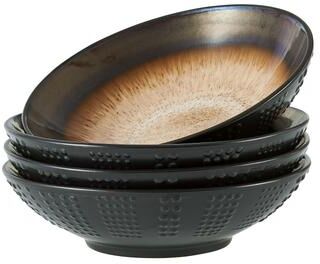
Mikasa Gourmet Basics Gourmet Basics by Mikasa Set of 4 Verona Pasta Bowl, 26 OzDrawing inspiration from the beautiful patterns of nature, this Verona Set of 4 Pasta Bowls by Mikasa features a combination of speckles, dots, and linear striations in rich earth tones.42,32 $*Shipping: 0,00 $Secure redirect to the provider



-
How can I express the following statement using quantifiers or mathematical symbols?
The statement "All cats are mammals" can be expressed using quantifiers and mathematical symbols as ∀x (Cat(x) → Mammal(x)), where ∀x denotes "for all x", Cat(x) represents "x is a cat", Mammal(x) represents "x is a mammal", and the arrow → denotes "implies". This statement asserts that for every x, if x is a cat, then x is a mammal. **
-
How do you describe and negate universal and existential quantifiers in statements?
Universal quantifiers, denoted by the symbol ∀, are used to make a statement about all elements in a set. For example, the statement "∀x, P(x)" means "For all x, P(x) is true." To negate a universal quantifier, we use the symbol ¬, so the negation of "∀x, P(x)" is "¬(∀x, P(x))," which can be rewritten as "∃x, ¬P(x)," meaning "There exists an x such that P(x) is false." Existential quantifiers, denoted by the symbol ∃, are used to make a statement about the existence of at least one element in a set. For example, the statement "∃x, P(x)" means "There exists an x such that P(x) is true." To negate an existential quantifier, we use the symbol ¬, so the negation of "∃x, P(x)" is **
-
What are the rules for negating mathematical statements using quantifiers and sets?
When negating a mathematical statement with quantifiers and sets, the following rules apply: 1. To negate a statement with a universal quantifier (∀), change it to an existential quantifier (∃) and vice versa. 2. When negating a statement involving sets, use the complement of the set to negate the original statement. 3. When negating a statement involving a logical connective (such as AND, OR), apply De Morgan's laws to distribute the negation over the connectives. **
-
Is Parmesan the best cheese for pasta?
Parmesan is a popular choice for pasta due to its strong, salty flavor and ability to melt easily. However, whether it is the best cheese for pasta is subjective and depends on personal preference. Other cheeses like Pecorino Romano, Grana Padano, or even a combination of different cheeses can also be delicious options for pasta dishes. Ultimately, the best cheese for pasta is the one that you enjoy the most. **


With which cheese do you eat pasta?
Parmesan cheese is a popular choice to sprinkle on top of pasta dishes. Its nutty and salty flavor complements the pasta well, enhancing the overall taste of the dish. Other cheeses like Pecorino Romano or Grana Padano can also be used to add a rich and savory element to pasta dishes. Ultimately, the choice of cheese depends on personal preference and the specific flavors you want to highlight in your pasta dish. **
Which wine pairs well with baked cheese?
A light to medium-bodied white wine pairs well with baked cheese. Consider a Chardonnay, Sauvignon Blanc, or Pinot Grigio to complement the creamy and rich flavors of the baked cheese. These wines provide a nice balance to the richness of the cheese and enhance the overall dining experience. **
Top-Angebote
Products related to Quantifiers:
-
Twine Rustic Farmhouse: Gourmet Cheese KnivesThe Rustic Farmhouse Gourmet Cheese Set is a beautiful collection of four assorted cheese tools. With stainless steel blades and rustic elegant acacia wood handles, this handsome set is perfect for entertaining, gift-giving and picnics!23,19 $*Shipping: 0,00 $Secure redirect to the provider
-
How do you solve compound quantifiers?
Compound quantifiers can be solved by breaking them down into simpler quantifiers and then applying the appropriate rules. For example, if the compound quantifier is "for every x, there exists a y such that...", you can first consider the "for every x" part and then the "there exists a y" part separately. This allows you to apply the rules for universal and existential quantifiers to solve the compound quantifier step by step. By breaking down the compound quantifier into simpler parts and applying the rules systematically, you can effectively solve compound quantifiers. **
-
How do universal and existential quantifiers describe and negate statements?
Universal quantifiers, denoted by the symbol ∀, are used to make a statement about all elements in a set. For example, the statement "∀x P(x)" means that the predicate P(x) is true for all elements x in the set. To negate a universally quantified statement, we use the symbol ¬ before the quantifier, so the negation of "∀x P(x)" would be "¬∀x P(x)", which is equivalent to "∃x ¬P(x)". On the other hand, existential quantifiers, denoted by the symbol ∃, are used to make a statement about at least one element in a set. For example, the statement "∃x P(x)" means that there exists at least one element x in the set for which the predicate P(x) is true. To negate an existentially quantified statement, we use the symbol ¬ before the quantifier, so the negation of "∃x **
-
How can I express the following statement using quantifiers or mathematical symbols?
The statement "All cats are mammals" can be expressed using quantifiers and mathematical symbols as ∀x (Cat(x) → Mammal(x)), where ∀x denotes "for all x", Cat(x) represents "x is a cat", Mammal(x) represents "x is a mammal", and the arrow → denotes "implies". This statement asserts that for every x, if x is a cat, then x is a mammal. **
-
How do you describe and negate universal and existential quantifiers in statements?
Universal quantifiers, denoted by the symbol ∀, are used to make a statement about all elements in a set. For example, the statement "∀x, P(x)" means "For all x, P(x) is true." To negate a universal quantifier, we use the symbol ¬, so the negation of "∀x, P(x)" is "¬(∀x, P(x))," which can be rewritten as "∃x, ¬P(x)," meaning "There exists an x such that P(x) is false." Existential quantifiers, denoted by the symbol ∃, are used to make a statement about the existence of at least one element in a set. For example, the statement "∃x, P(x)" means "There exists an x such that P(x) is true." To negate an existential quantifier, we use the symbol ¬, so the negation of "∃x, P(x)" is **
Similar search terms for Quantifiers
-
Mikasa Gourmet Basics Gourmet Basics by Mikasa Set of 4 Verona Pasta Bowl, 26 OzDrawing inspiration from the beautiful patterns of nature, this Verona Set of 4 Pasta Bowls by Mikasa features a combination of speckles, dots, and linear striations in rich earth tones.42,32 $*Shipping: 0,00 $Secure redirect to the provider
-
Gourmet Basics by Mikasa Mikasa Gourmet Basics Wine and Charcuterie Serving BoardHost in style with this Gourmet Basics Wine and Charcuterie Serving Board. Beautifully crafted of durable acacia wood, this stunning board is an easy way to serve wine, appetizers, cheese, and more.46,79 $*Shipping: 0,00 $Secure redirect to the provider
-
Spode Blue Italian Pasta Bowl - 12 inchSpode Blue Italian 12-Inch Pasta Bowl - Decorative Earthenware Dinnerware with Scenic Border Design - Elegant Blue & White Tableware for Dinner, Snacks, Side Dishes - New Elevate your daily dining rituals with the Spode Blue Italian 12-Inch Pasta...101,00 $*Shipping: 0,00 $Secure redirect to the provider
-
What are the rules for negating mathematical statements using quantifiers and sets?
When negating a mathematical statement with quantifiers and sets, the following rules apply: 1. To negate a statement with a universal quantifier (∀), change it to an existential quantifier (∃) and vice versa. 2. When negating a statement involving sets, use the complement of the set to negate the original statement. 3. When negating a statement involving a logical connective (such as AND, OR), apply De Morgan's laws to distribute the negation over the connectives. **
-
Is Parmesan the best cheese for pasta?
Parmesan is a popular choice for pasta due to its strong, salty flavor and ability to melt easily. However, whether it is the best cheese for pasta is subjective and depends on personal preference. Other cheeses like Pecorino Romano, Grana Padano, or even a combination of different cheeses can also be delicious options for pasta dishes. Ultimately, the best cheese for pasta is the one that you enjoy the most. **
-
With which cheese do you eat pasta?
Parmesan cheese is a popular choice to sprinkle on top of pasta dishes. Its nutty and salty flavor complements the pasta well, enhancing the overall taste of the dish. Other cheeses like Pecorino Romano or Grana Padano can also be used to add a rich and savory element to pasta dishes. Ultimately, the choice of cheese depends on personal preference and the specific flavors you want to highlight in your pasta dish. **
-
Which wine pairs well with baked cheese?
A light to medium-bodied white wine pairs well with baked cheese. Consider a Chardonnay, Sauvignon Blanc, or Pinot Grigio to complement the creamy and rich flavors of the baked cheese. These wines provide a nice balance to the richness of the cheese and enhance the overall dining experience. **
* All prices are inclusive of VAT and, if applicable, plus shipping costs. The offer information is based on the details provided by the respective shop and is updated through automated processes. Real-time updates do not occur, so deviations can occur in individual cases. ** Note: Parts of this content were created by AI.